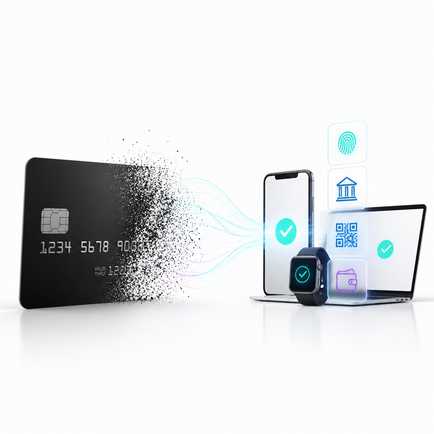
For decades, the physical bank card has been the undisputed workhorse of global commerce. The familiar 16-digit number, the magnetic stripe, the EMV chip—these have been the physical keys to digital money. Yet, the industry is now crossing a quiet threshold. The question is no longer if the traditional card will be replaced, but what exactly will take its place.
We are not witnessing a sudden death, but a gradual dissolution. The card as a physical object is becoming obsolete, while the card as a payment method is being unbundled into a series of more intelligent, embedded, and programmable financial tools. For businesses operating in high-growth or high-risk sectors, understanding this shift is not optional—it is strategic survival.
Why the Physical Card Is Fading
The decline of the plastic rectangle is driven by a collision of consumer behavior, technological capability, and regulatory pressure. Consumers no longer want a tool; they want an experience. They want payments to happen invisibly, instantly, and securely within the context of their digital lives. The physical card is simply too clunky for this reality.
Simultaneously, the infrastructure that supports cards—the acquiring networks, the settlement rails, the chargeback systems—is being layered with new logic. Tokenization, real-time payment schemes, and open banking APIs are eroding the card’s monopoly on remote commerce. The card number itself is now a liability; the token is the asset.
The Rise of Account-to-Account (A2A) Payments
The most significant challenger to the card is the direct transfer of funds between bank accounts. Open Banking frameworks, particularly under PSD2 in Europe, have forced traditional banks to open their APIs to third-party providers. This has enabled a new generation of payment initiation services that bypass the card networks entirely.
For merchants, the appeal is clear. A2A payments typically offer lower interchange fees, immediate settlement, and a drastic reduction in chargeback risk. For consumers, it means paying directly from their bank balance without the intermediary of a card issuer. This is not a fringe movement; it is the default payment method in several Asian markets and is rapidly gaining traction in Europe and Latin America.
However, A2A is not a universal panacea. It lacks the consumer protections and dispute resolution mechanisms that cards have built over decades. For high-ticket items or cross-border transactions, the card’s chargeback framework still provides a level of trust that A2A cannot yet replicate.
Tokenization: The Card Without the Plastic
Before the card dies, it will be digitized. Tokenization replaces the sensitive card number with a unique, single-use or limited-use digital identifier. This token can be stored in a digital wallet, on a merchant’s server, or within an IoT device. The actual card details are never transmitted or stored.
This is the technology enabling click-to-pay, mobile wallets, and one-click checkout experiences. The merchant no longer sees a PAN (Primary Account Number); they see a token that is useless if intercepted. This is a massive security upgrade, but it also fundamentally changes the relationship between the merchant, the issuer, and the network. The merchant is no longer processing a card; they are processing an authorization token.
The strategic implication for businesses is that they must now manage token lifecycles, handle network token vaults, and integrate with wallet providers. This is a significant shift from the simple “plug in a gateway and go” approach of the past.
Wallets and Super-Apps: The New Front End
Consumers are increasingly interacting with money through digital wallets—Apple Pay, Google Pay, Alipay, or region-specific super-apps. The wallet is the new front end, and the card is just one of many funding instruments behind it. The wallet can hold cards, bank accounts, loyalty points, and even crypto assets.
For the merchant, this means the acceptance strategy must be wallet-first. If you are not optimized for digital wallets, you are invisible to a growing segment of the market. This is particularly true for mobile-first demographics in emerging markets where the leapfrog from cash directly to mobile payments has skipped the card era entirely.
Programmable Money and Stablecoins
The most disruptive force on the horizon is the convergence of crypto assets and traditional finance. Stablecoins—cryptocurrencies pegged to fiat currencies—offer the speed of crypto settlement with the stability of traditional money. They can be programmed, they settle in minutes, and they operate 24/7/365.
For cross-border B2B payments, high-risk merchant payouts, or supply chain financing, stablecoins are already a viable alternative to card rails. They eliminate the correspondent banking delays and the high fees associated with international wire transfers. This is not about speculation; it is about utility.
Businesses that need to move money quickly, particularly in jurisdictions with restricted banking access, are turning to stablecoin infrastructure to manage liquidity and pay suppliers. The card network is irrelevant in this equation.
What This Means for Your Business Strategy
If the card is dying, what should a forward-thinking business do? The answer is not to abandon card acceptance—that would be commercial suicide in the short term—but to build a payment architecture that is card-agnostic. Your infrastructure should be flexible enough to route a transaction through the most efficient rail, whether that is a card network, an A2A transfer, a wallet, or a stablecoin.
This requires a sophisticated approach to payment orchestration. You need a partner who understands the nuances of acquiring, the complexity of regulatory compliance, and the technical architecture required to support multiple payment types. This is particularly critical for businesses in high-risk verticals—gaming, crypto, adult entertainment, or e-commerce—where traditional acquiring banks are often hesitant to provide services.
Building this infrastructure in-house is costly and time-consuming. It requires deep expertise in payment gateway integration, risk management, and the specific regulatory landscape of each market you operate in. This is where specialized consulting becomes essential.
How to Prepare for the Post-Card Era
The transition will not be uniform. Some markets will cling to cards for a decade or more. Others will leapfrog directly to digital-first solutions. Your strategy must be agile enough to handle both realities simultaneously.
Start by auditing your current payment stack. Identify where you are overly reliant on a single card processor or network. Assess your readiness for tokenization and wallet acceptance. Explore whether A2A payments or stablecoin settlement could reduce your costs or expand your geographic reach. Most importantly, ensure your compliance framework is robust enough to handle the new regulatory requirements that come with these alternative payment methods.
The end of bank cards is not a prediction of doom; it is a forecast of opportunity. The businesses that thrive will be those that see the card not as the destination, but as just one stop on a much longer journey.
Conclusion
The physical bank card is being replaced by something more fluid, more intelligent, and more integrated. It is being replaced by a payment ecosystem where the transaction is embedded in the user experience, where settlement is instant, and where the concept of a “card” is merely a legacy data format. The future belongs to businesses that can navigate this complexity with agility and foresight.
At ICE PAY, we help businesses design and implement payment architectures that are ready for this future. With two decades of experience across acquiring, regulatory compliance, and high-risk merchant services, we provide the strategic guidance and technical infrastructure needed to move beyond the card. Whether you are looking to optimize your current acquiring setup, expand into crypto payments, or secure corporate banking relationships, our team is equipped to support your transition.
Comments are closed