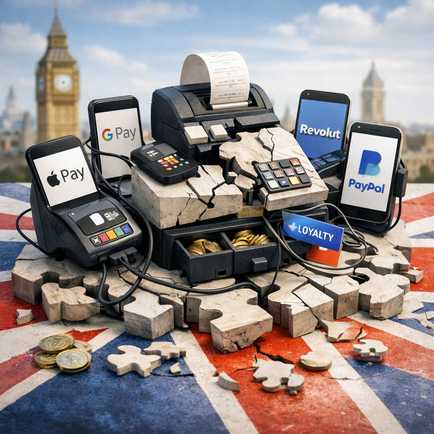

The UK is rapidly becoming one of the most wallet-dense markets in Europe. And for merchants, that is turning into an operational headache.
We are watching a paradox play out in real time. Consumer adoption of mobile wallets is surging—it is now the default payment method for a massive chunk of UK online and in-store spend. But the commercial reality for the businesses accepting those payments is a web of fragmented integrations. You have the default wallet providers, the neobank-specific wallets, the retail loyalty wallets, and the new entrants trying to carve out share by offering better rewards.
Every single one of those is a separate integration. A separate settlement file. A separate reconciliation process. A separate dispute flow.
The cost of this fragmentation is rarely visible on the front end. It is buried in the back office. It shows up in the finance team’s month-end close, in the developer hours spent maintaining API connections that break on update, and in the support tickets generated when a customer insists a wallet payment went through but the merchant’s system shows nothing.
For a PSP or acquirer, the margin erosion is silent. You are now running a multi-rail operation where the “wallet” is not a single rail but a dozen different technical specifications, each with its own quirks regarding refunds, partial captures, and settlement timing.
In the view of Frederic Yves Michel NOEL, the winners here will not be the wallet with the best UX. The winners will be the payment platforms that abstract this complexity away for the merchant. The merchant does not want to manage a portfolio of wallet relationships. They want one contract, one dashboard, and one reconciliation file. If you are a PSP and your strategy is simply to “support all wallets” without unifying the operational layer, you are just passing the complexity—and the cost—down to your merchant.
The commercial consequence is clear. Merchants are starting to ask the hard questions about total cost of ownership, not just the per-transaction fee. They are realizing that a slightly lower interchange rate is meaningless if it requires three days of manual reconciliation work every month.
For payment teams working with UK merchants, where is the fragmentation hurting most right now—integration cost or back-office reconciliation?
Comments are closed